Drought means less honey this summer as nectar dries up
See more DutchNews articles in your Google search results
See more DutchNews articles in your Google search results
Add as a favourite source on Google Add DutchNews as a favourite source on GoogleThe persistent drought in the Netherlands has now affected beekeepers, who have noticed that honey production is down this summer. Flowers are blooming for a shorter period, if at all, making it impossible for honeybees to collect the nectar they need to survive.
Professional beekeeper and secretary of the Professional Beekeepers’ Association John Hoogendoorn chalks it up to climate change. “There are increasingly longer periods of drought and higher temperatures, which changes the habitat of the bees,” he told broadcaster NOS. “Nature and the rich biodiversity have deteriorated over the years.”
He said the damage is particularly acute on the dry sandy soils in the east of the country, where the heather honey season has only just begun. Beekeepers report seeing dry shrubs and very little purple, flowering heather there.
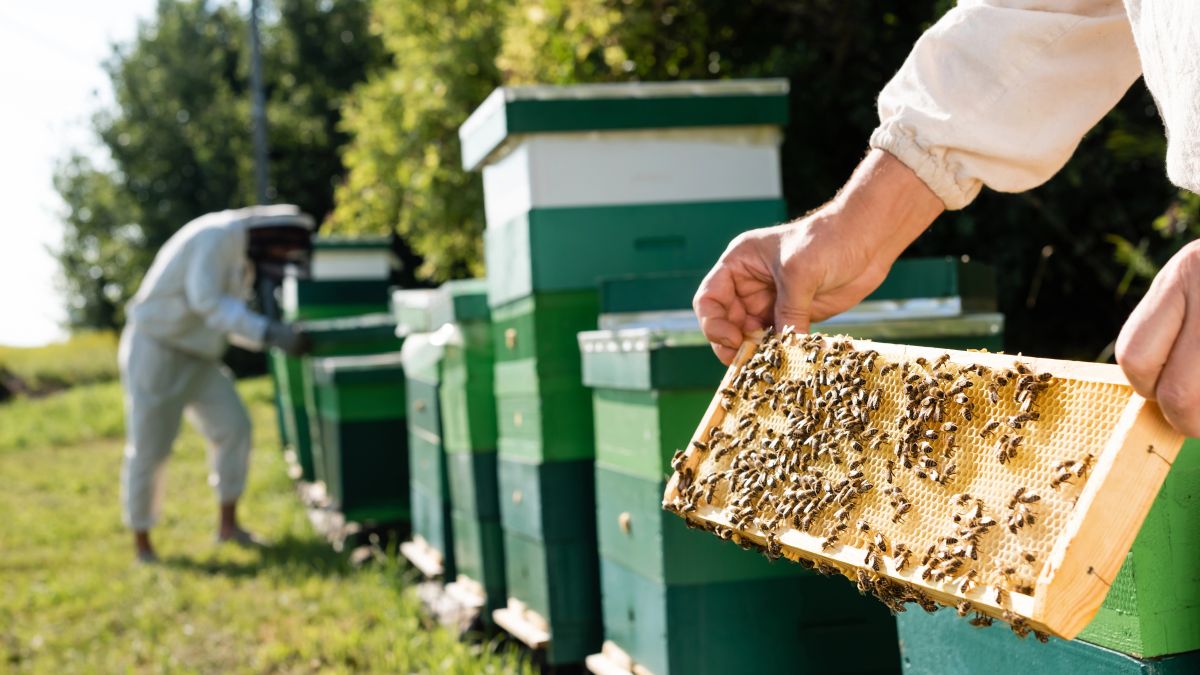
Beekeeper Frauke Wessel from Haarlemmermeer has also seen the change. “The bees bring in food to keep their colony alive. But we notice that the honeycomb is no longer filled. The queen bee also lays fewer eggs because she does not get enough food,” she told NOS.
Honeybees need nectar to give them energy for flight and other daily colony tasks. They also convert any excess nectar into stored honey to get them through flowerless winters.
Because the honeybees can’t build up their winter supplies this rainless summer, beekeepers like Hoogendoorn are making up for the lack of honey with dissolved sugar. He told NOS that he needs about 15 kilos of sugar per colony this year to substitute for the honey shortage. “That’s more than in previous years.”
Bees are usually active in the country from the end of February until mid-September. “But due to the high temperatures, the bee season lasts longer and starts earlier,” said beekeeper Joris Knoops.
Flies, wasps, mosquitoes and dragonflies are also suffering from the lack of water.
Thank you for donating to DutchNews.nl.
We could not provide the Dutch News service, and keep it free of charge, without the generous support of our readers. Your donations allow us to report on issues you tell us matter, and provide you with a summary of the most important Dutch news each day.
Make a donation